The Climate Factor Most Fleet Managers Overlook
When businesses invest in vehicle wraps for their fleets, the conversation almost always centers on design, branding, and installation quality. Rarely does the discussion turn to geography — yet where a vehicle operates day after day may be the single most consequential variable in determining how long a wrap actually lasts. Fleet managers operating in Phoenix, Las Vegas, or Tucson are working with a fundamentally different material reality than those running vehicles through Seattle, Portland, or the upper Midwest. Understanding the relationship between climate zone and wrap longevity is not a minor detail. It is the difference between a wrap that performs for seven years and one that begins peeling, fading, and cracking before the third year is out.
Desert Climates: The 2-4 Year Reality
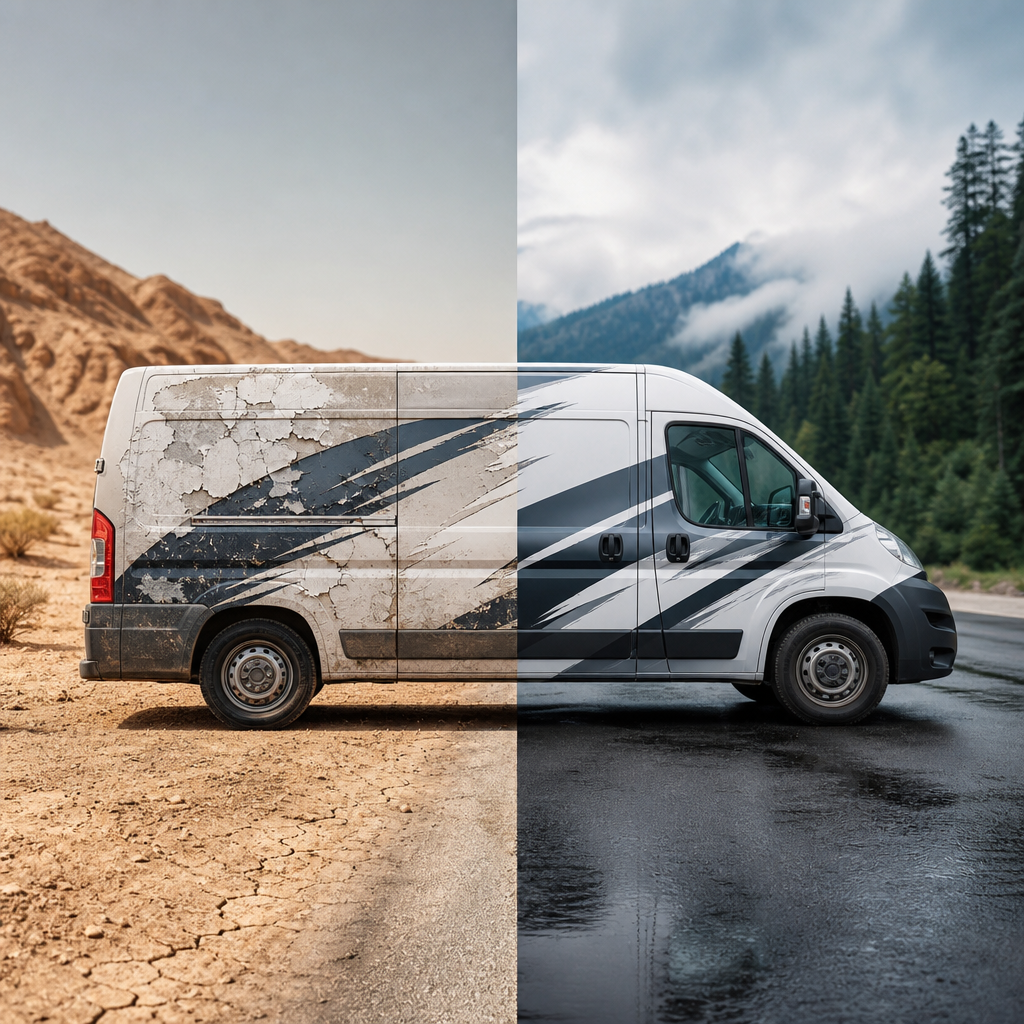
In arid desert environments, vehicle wraps face a relentless combination of stressors that accelerate material degradation at a rate that temperate climates simply cannot match. Ultraviolet radiation is the primary culprit. Desert regions receive significantly more direct sunlight hours per year, and the angle and intensity of that radiation breaks down the polymers in vinyl wrap films at an accelerated pace. The result is color fading, surface chalking, and a loss of the adhesive bond that keeps the wrap flush against the vehicle’s body panels.
Heat Cycling and Its Cumulative Damage
Beyond UV exposure, desert climates subject wraps to extreme heat cycling — the repeated expansion and contraction of materials as temperatures swing from scorching daytime highs to cooler nights. In cities like Phoenix, surface temperatures on a parked vehicle can exceed 180°F during summer months. This thermal stress causes the vinyl to expand and contract repeatedly, weakening the adhesive layer and eventually causing edge lifting, bubbling, and delamination. Even premium cast vinyl films rated for extended outdoor use will show measurable degradation within 24 to 36 months under these conditions. Realistically, a well-maintained fleet wrap in a desert climate should be budgeted for replacement on a 2-to-4-year cycle to maintain professional appearance and brand integrity.
Sand, Dust, and Abrasive Particulates
Desert environments also introduce a mechanical wear factor that temperate regions rarely contend with at the same scale. Fine sand and dust particles act as a low-grade abrasive, particularly at highway speeds. Over time, this micro-abrasion dulls the surface finish of the wrap, compromising both the visual quality and the protective laminate layer. Fleets operating on unpaved or partially paved desert roads face an even steeper degradation curve, often pushing wrap replacement closer to the two-year mark.
Temperate Climates: The 5-7 Year Advantage
In temperate climate zones — broadly defined as regions with moderate temperatures, seasonal variation, and consistent precipitation — vehicle wraps operate in a far more forgiving environment. UV exposure is lower in both intensity and annual duration. Temperature extremes are less severe, reducing the thermal cycling stress that plagues desert wraps. Humidity levels, while they introduce their own considerations, generally do not accelerate vinyl degradation the way sustained heat and UV radiation do.
Why Temperate Wraps Routinely Reach 5-7 Years
Fleet wraps in temperate regions such as the Pacific Northwest, New England, or the Great Lakes area routinely achieve five to seven years of serviceable life when properly installed and maintained. The adhesive bond remains stable across more moderate temperature ranges. Color retention is significantly better because UV degradation accumulates more slowly. Even the mechanical surface of the wrap holds up longer because precipitation helps rinse away particulate matter rather than allowing it to grind against the film during wind events. For fleet managers in these regions, a seven-year replacement cycle is achievable with quality materials and routine care — a timeline that dramatically improves the return on investment for the original wrap installation.
The Role of Material Selection Across Climate Zones
Not all vinyl wrap films are created equal, and climate zone should be a primary driver of material selection. Cast vinyl films, which are manufactured through a casting process that produces a thinner, more conformable, and more dimensionally stable product, consistently outperform calendered vinyl in both desert and temperate conditions. In desert climates, the additional investment in a premium cast film with a high-performance UV-resistant laminate is not optional — it is the baseline requirement for achieving even the lower end of the 2-to-4-year lifespan range. In temperate climates, cast vinyl with standard lamination is typically sufficient to reach the upper end of the 5-to-7-year window.
Laminate Choices and UV Protection
The laminate layer applied over the printed vinyl is the wrap’s primary defense against UV degradation. Gloss laminates offer strong UV resistance and are easier to clean, making them well-suited for desert environments where dust accumulation is frequent. Matte laminates, while popular for their premium aesthetic, can be slightly more susceptible to surface soiling in dusty conditions. Regardless of finish preference, fleet operators in high-UV zones should specify laminates with the highest available UV inhibitor ratings and consider ceramic-infused options where available.
Understanding Weather’s Broader Impact on Fleet Graphics
Climate zone is the macro-level framework, but weather patterns within those zones introduce additional variables that fleet managers must account for. Coastal temperate environments, for example, introduce salt air exposure that can accelerate edge corrosion and adhesive failure around panel seams. Mountainous regions with significant UV at altitude can shorten wrap life even in otherwise temperate climates. Understanding how weather affects fleet graphics at a granular level — accounting for local humidity, altitude, precipitation chemistry, and seasonal temperature swings — allows fleet operators to build more accurate replacement budgets and select materials that are genuinely matched to their operating environment rather than simply meeting a generic industry standard.
Maintenance Practices That Extend Wrap Life in Any Climate
Regardless of climate zone, consistent maintenance practices can meaningfully extend wrap lifespan. Hand washing with pH-neutral soap is strongly preferred over automated brush car washes, which can lift edges and introduce micro-scratches. In desert climates, more frequent washing is necessary to remove abrasive dust before it can cause surface damage. Parking in covered or shaded areas whenever possible dramatically reduces UV exposure accumulation. For fleets operating in temperate climates with harsh winters, prompt removal of road salt and de-icing chemicals prevents adhesive degradation along lower panel edges. Buyers sourcing maintenance products and protective accessories for their fleet vehicles can find useful guidance through resources like this buyer’s guide for evaluating specialty equipment suppliers, which outlines key criteria applicable across industries where material durability is paramount.
Building Resilience Into Your Fleet Graphics Program
The most forward-thinking fleet operators treat wrap management as a strategic program rather than a one-time purchase decision. This means establishing climate-adjusted replacement schedules, tracking wrap condition systematically across the fleet, and building material and labor costs into multi-year operating budgets. Industry professionals focused on building resilience in fabrication and materials management consistently emphasize that proactive planning — rather than reactive replacement — produces better cost outcomes and more consistent brand presentation over time. For fleet graphics, this translates directly into knowing your climate zone, selecting appropriate materials, and scheduling replacements before wraps reach the point of visible failure.
Craftsmen Industries: Climate-Informed Fleet Graphics Solutions
Craftsmen Industries brings decades of experience in fleet graphics production and installation, with a deep understanding of how operating environment shapes material performance. Their team works with fleet operators across climate zones to specify the right vinyl films, laminates, and installation techniques for each application — whether that means engineering a desert-hardened wrap package designed to maximize performance within a compressed replacement cycle, or building a temperate-climate program that stretches quality materials across a seven-year horizon. Their approach is grounded in real-world performance data and a commitment to delivering fleet graphics that maintain brand integrity throughout their intended service life.
Conclusion: Match Your Wrap Strategy to Your Climate
The 2-to-4-year versus 5-to-7-year lifespan gap between desert and temperate climate zones is not a minor variance — it represents a fundamentally different operating reality that demands different materials, different maintenance protocols, and different budget planning. Fleet managers who treat wrap replacement as a climate-agnostic decision will consistently find themselves either over-spending in temperate regions or under-budgeting in desert environments. The path to a cost-effective, high-performing fleet graphics program begins with an honest assessment of where your vehicles actually operate and what that environment genuinely demands from the materials protecting your brand on the road.